Dental Implants vs Dentures: Which Is Right for You?
When it comes to restoring your smile, both dental implants and dentures are effective solutions for replacing missing teeth, yet they differ significantly in how they function, feel, and perform over the long term. The difference lies in key factors such as stability, cost, maintenance, longevity, and lifestyle impact. To choose the best option for you, schedule a consultation today to talk through your goals with a professional to get personalized recommendations tailored to your unique needs.
What Are Dental Implants?
Dental implants are tiny titanium posts that fuse with your jawbone, acting just like natural tooth roots. They are surgically placed to hold a crown, bridge, or denture. Because they are permanently fixed in place, implants look, feel, and function exactly like natural teeth, making them a great option for replacing a lost tooth. It also has the added benefit of helping preserve your jawbone health and prevent problems in the future. We highly recommend implants if you are looking for a stable, long-term solution.
What Are Dentures?
Dentures are a great, non-surgical solution for replacing missing teeth. They are removable prosthetic devices available as full dentures to replace an entire arch or partial dentures, which replace some teeth while keeping healthy ones. Dentures rest directly on your gums and are considered cost-effective compared to other options. However, keep in mind that they can move, slip, and feel less stable than implants, and do not help prevent bone loss in your jaw.
Side-by-Side Comparison: Implants vs Dentures
When deciding between implants and dentures, here is what you need to consider:
Stability and Comfort
- Dental Implants:
- Permanently anchored in the jawbone
- Feel and function like natural teeth
- No movement, slipping, or shifting
- Highest comfort level
- Dentures:
- Rest on gums, held by suction or adhesive
- Can slip, click, or move while eating and speaking
- May cause gum irritation or sore spots
- Adjustment period required
Chewing Power and Diet
- Dental Implants:
- Restore up to 70% of natural bite force
- Eat all foods confidently (steak, apples, etc.)
- No dietary restrictions
- Natural chewing sensation
- Dentures:
- Provides only 20-25% of natural bite force
- Difficulty with hard, sticky, or chewy foods
- May require cutting food into small pieces
- A soft food diet is often necessary
Speech Quality
- Dental Implants:
- Natural, clear speech
- No interference with tongue movement
- No clicking sounds
- Dentures:
- Initial speech difficulties common
- May cause slurred words or clicking
- Requires practice and an adjustment period
- An upper denture can affect the palate and speech
Bone Health and Facial Structure
- Dental Implants:
- Stimulate the jawbone like natural tooth roots
- Prevent bone loss and deterioration
- Maintain facial shape and youthful appearance
- Preserve jawbone density long-term
- Dentures:
- Do NOT prevent bone loss
- Jawbone continues to shrink over time
- Can lead to a "sunken" facial appearance
- Requires frequent adjustments as the bone changes
- May accelerate bone resorption
Appearance and Aesthetics
- Dental Implants:
- Custom-designed to match natural teeth
- Seamlessly blend with your smile
- No visible metal or artificial look
- Support lips and facial contours naturally
- Dentures:
- Can look natural with quality materials
- May appear artificial if poorly fitted
- Bulkiness can alter facial proportions
- "Denture look" possible with bone loss over time
Pros and Cons of Dental Implants
Advantages of Dental Implants
- Permanent and stable: Fixed in place, no slipping or removal
- Natural feel and function: Closest to natural teeth
- Superior chewing power: Eat all foods without restriction
- Preserve jawbone: Prevent bone loss and facial sagging
- Protect adjacent teeth: No need to alter healthy teeth (unlike bridges)
- Long-lasting: Can last 25+ years or a lifetime with proper care
- Easy maintenance: Brush and floss like natural teeth
- No dietary restrictions: Enjoy crunchy, sticky, hard foods
- Confidence: Never worry about slipping or clicking
- Better oral health: Easier to clean, reduced gum disease risk
Disadvantages of Dental Implants
- Higher upfront cost: $3,000-$6,500 per tooth (vs. $1,000-$3,000 for dentures)
- Surgical procedure required: Involves drilling into the jawbone
- Longer treatment timeline: 3-6 months from placement to final restoration
- Healing period: Osseointegration takes 3-6 months
- Not suitable for everyone: Requires adequate bone density and good health
- Potential need for bone grafting: Additional cost and time if the bone is insufficient
- Small failure risk: 2-5% may not integrate properly
- Upfront commitment: Higher initial investment required
Pros and Cons of Dentures
Advantages of Dentures
- Lower upfront cost: $1,000-$3,000 for a full set (more affordable initially)
- Non-surgical option: No drilling or invasive procedures
- Faster treatment: Can be completed in 4-8 weeks
- Replace many teeth at once: Efficient for extensive tooth loss
- Removable for cleaning: Easy to clean outside the mouth
- Adjustable and replaceable: Can be modified as needed
- No bone requirements: Works even with significant bone loss
- Option for all budgets: Most affordable tooth replacement
Disadvantages of Dentures
- Instability: Can slip, click, or move during eating and speaking
- Reduced chewing efficiency: Only 20-25% of natural bite force
- Dietary limitations: Difficulty with hard, sticky, crunchy foods
- Do NOT prevent bone loss: Jawbone continues to deteriorate
- Frequent adjustments needed: Bone loss causes a poor fit
- Shorter lifespan: Need replacement every 5-7 years
- Daily removal required: Must take out for cleaning and sleeping
- Adhesives necessary: Messy and inconvenient
- Gum irritation common: Sore spots and discomfort
- Speech difficulties: May cause slurring or clicking sounds
- Psychological impact: Embarrassment about removal or slipping
Longevity: How Long Do They Last?
Dental Implant Longevity
Dental implants offer excellent long-term value. While the crown attached to the implant typically needs replacement every 10–15 years, the titanium implant post itself is incredibly durable and is designed to last a lifetime! To ensure your implants last for decades, focus on excellent oral hygiene, keep up with regular dental checkups, don't smoke, and keep a healthy diet. Ultimately, the initial investment in implants pays off significantly over time.
Denture Longevity
While dentures are a great option, they naturally have a shorter lifespan and are considered a less permanent solution. The average denture set needs replacement every 5–7 years. Throughout their life, you will also need relines every 1–2 years (costing $300–$500) because your jawbone will shrink over time, causing the fit to loosen. There are also different factors impacting their longevity, such as bone loss, daily wear and tear, proper cleaning and storage, and the quality of the materials. Because of this necessary replacement cycle, most patients will need about 4–5 sets of dentures over their lifetime.
Maintenance and Care Requirements
Caring for Dental Implants
- Brush twice daily with a soft-bristle toothbrush
- Floss daily around implants
- Rinse with antimicrobial mouthwash
- Regular dental checkups every 6 months
- Professional cleanings to prevent peri-implantitis
- X-rays to monitor bone levels annually
- Avoid chewing ice or hard objects
- Wear a nightguard if you grind your teeth
Caring for Dentures
- Remove and rinse after every meal
- Brush dentures with a soft brush and denture cleaner (not toothpaste)
- Soak overnight in denture solution
- Brush gums, tongue, and palate each morning
- Apply denture adhesive before wearing
- Regular checkups every 6 months
- Relines every 1-2 years as the bone shrinks
- Repairs for cracks or loose teeth as needed
- Must remove nightly
- Ongoing cost of adhesives, cleaners, and soaking solutions
- Dietary restrictions to prevent damage
- Risk of losing or breaking dentures
What NOT to Compromise On
While saving money is important, never compromise on quality, as failure leads to greater costs later! Research is key; don't automatically choose the cheapest option without thoroughly researching the provider and the quality of their materials. Never skip necessary steps like bone grafts; these preparatory procedures are important for the long-term success of your implant. Additionally, be wary of pricing that seems "too good to be true," providers who pressure you to decide immediately, or those who won't give you a clear, detailed cost breakdown are a red flag.
Dental Implants vs Dentures Cost Comparison: Upfront and Long-Term
Initial Investment
- Dental Implants:
- Single tooth: $3,000-$6,500
- Multiple teeth (3-4 teeth on 2 implants): $6,000-$15,000
- Full arch (All-on-4): $20,000-$35,000
- Full mouth (both arches): $40,000-$70,000
- Dentures:
- Full upper or lower denture: $1,500-$3,000
- Complete set (both arches): $2,500-$6,000
- Partial denture: $1,000-$2,500
- Premium/custom dentures: $4,000-$8,000 per arch
Insurance Coverage
- Dental Implants:
- Typically 0-50% coverage (varies by plan)
- Crown often covered at 50%
- Surgery/implant post less commonly covered
- Annual maximum limits apply ($1,000-$2,000/year)
- Dentures:
- Usually covered at 50% after deductible
- Considered "major service" in most plans
- Replacement covered once every 5-7 years
- Better insurance coverage than implants typically
Financing Options
- Both options offer:
- CareCredit and healthcare financing (0% APR promotional periods)
- In-house payment plans
- HSA/FSA funds applicable
- Monthly payment options
Key difference: Lower denture cost easier to finance short-term, but implants may be better long-term investment
True Cost Over Time
- Break-even analysis: After approximately 7-10 years, the cumulative cost of dentures (with relines, replacements, and adhesives) often equals or exceeds implant cost. From year 10 onward, implants are typically less expensive.
- Keyword Focus: Dental implants vs dentures cost, how much do implants cost vs dentures, cost comparison implants dentures
- Opportunities: Include a Cost Comparison Table showing initial cost, 5-year cost, 10-year cost, and 25-year cost for both options.
Implant-Supported Dentures: The Middle Ground
What Are Implant-Supported Dentures?
Implant-supported dentures are the perfect hybrid solution between dentures and implants. We securely attach a full denture to 2 to 4 dental implants, offering a great balance between the stability of implants and the affordability of traditional dentures. These can be either removable, like snap-ons, or fixed in place, like the All-on-4/6 option. It is significantly more stable than regular dentures, plus they do a better job of helping prevent bone loss.
Benefits of the Hybrid Approach
This hybrid approach is more affordable than individual implants ($6,000–$16,000 per arch) while giving you dramatically improved stability compared to traditional dentures, which means no slipping, up to 50% better chewing power, and a huge confidence boost! Plus, it has less palate coverage and reduced gum irritation, and offers better comfort, and the implants even help prevent some bone loss.
Who Benefits Most
Implant-supported dentures are a perfect fit for budget-conscious patients looking for a significant upgrade from traditional dentures who cannot afford individual implants for every tooth. They are also a great option if you have experienced moderate bone loss or if you prefer the option of a removable denture for easier cleaning.
Which Option Is Right for You?
Choose Dental Implants If:
- You want the most natural feel and function
- You have adequate bone density (or are willing to undergo bone grafting)
- You are healthy enough for surgery
- You can afford a higher upfront investment
- You want a permanent, long-term solution
- You prioritize preserving jawbone and facial structure
- You want freedom to eat all foods
- You prefer minimal daily maintenance
- You value superior stability and confidence
- You're looking for the best long-term value
Choose Traditional Dentures If:
- Budget is the primary concern, and you need the most affordable option immediately
- You are not a candidate for surgery due to health conditions
- You have significant bone loss and want to avoid grafting
- You prefer non-invasive, reversible treatment
- You need to replace many or all teeth quickly
- You are comfortable with a removable appliance
- You can adapt to dietary restrictions and a maintenance routine
- You want the option covered more fully by insurance
Consider Implant-Supported Dentures If:
- You want better stability than traditional dentures, but cannot afford individual implants for each tooth
- You have moderate bone loss
- You want to prevent further bone deterioration
- You desire improved chewing function (middle ground)
- You want a removable option for easier cleaning
- You're looking for a significant upgrade from traditional dentures at a moderate cost
Making Your Decision: Next Steps
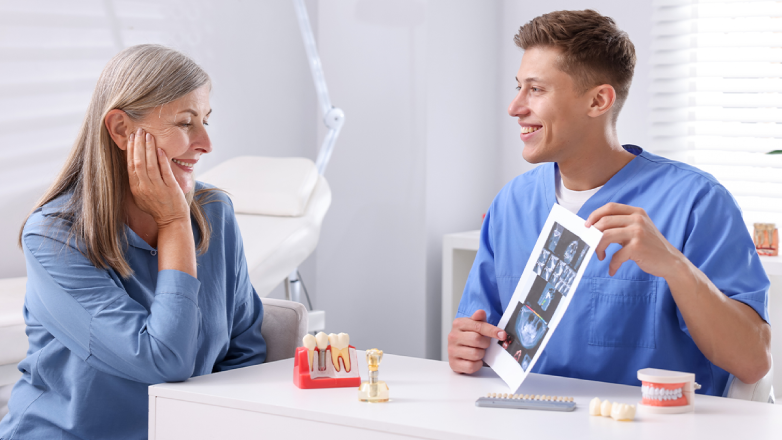
When you are ready to take the next step toward your new smile, the best way to start is by scheduling a comprehensive consultation with us. During this visit, your dentist will perform a detailed oral exam and 3D imaging to assess your bone health. We will discuss your medical history, lifestyle goals, and budget. It's a great time to ask questions to make sure you are getting the treatment that you deserve, so you can feel completely confident in your choice. Remember, we are your partner in this journey, so take your time to understand all your options and prioritize the long-term value that fits your needs!
Why Choose Riccobene for Your Tooth Replacement
At Riccobene, you will be treated by board-certified implant specialists with years of experience and a high success rate, ensuring your smile is in the most skilled hands. We use advanced technology and a gentle approach to ensure your procedure is precise and efficient, keeping you comfortable throughout. Additionally, we provide affordable solutions by helping coordinate flexible financing options and accepting a wide range of dental implant insurance plans to bring you affordable dental implants. We strive to make our office a warm, inviting, and patient-friendly place where you can keep smiling confidently. Schedule your appointment today to get your dream smile!
Frequently Asked Questions About Dentures Vs Dental Implants
Dentures vs dental Implants, which lasts longer?
Dental implants last significantly longer than dentures. While the crown needs replacement after 10–15 years, the implant post itself can last a lifetime with proper care. Dentures typically need to be replaced every 5–7 years due to wear and changes in your jawbone.
Are dental implants better than dentures?
Dental implants are generally considered the better long-term option because they are more stable, comfortable, and help prevent bone loss. However, if you are looking for a more affordable non-surgical option, dentures might be a better choice for you.
How much more do dental implants cost than dentures?
Looking at the dental implants vs dentures cost, dental implants have a higher upfront cost, typically ranging from $3,000 to $6,500 per tooth. Dentures are more affordable initially, usually costing between $1,000 and $3,000 per arch. However, over time, dentures cost more due to replacements, relines, and maintenance.
Can I switch from dentures to dental implants later?
Yes, many patients start with dentures and later switch to dental implants.
Do dental implants feel like real teeth?
Yes, dental implants are the closest thing to natural teeth. Because they are anchored in your jawbone, they feel stable and function just like real teeth when chewing and speaking.
Will dentures affect my ability to eat?
Dentures can make eating certain foods more challenging, especially hard, sticky, or chewy items. You might need to adjust your diet or cut food into smaller pieces. But with implants, you will be able to eat most foods without restriction.
How painful is getting dental implants compared to dentures?
Dental implant placement is a surgical procedure, but it’s done with local anesthesia to keep you comfortable. You will experience some soreness during healing, which is normal. Dentures are non-surgical, so there’s no procedure pain, but they can cause discomfort or irritation as you adjust to wearing them.
Can I get dental implants if I currently wear dentures?
Yes, many denture wearers upgrade to dental implants or implant-supported dentures for more support.
What is the success rate of dental implants?
Dental implants have a very high success rate of around 95–98%!
How often do dentures need to be replaced?
Most dentures need to be replaced every 5–7 years. You will also need adjustments or relines every 1–2 years as your jawbone naturally changes shape over time.
Are implant-supported dentures better than traditional dentures?
Implant-supported dentures are more stable and comfortable than traditional dentures. They snap into place using dental implants, which reduces slipping and improves chewing ability while still being more affordable than full-mouth implants.
Does insurance cover dental implants or dentures better?
Some insurance plans cover a portion of the cost. Give us a call, and we are happy to discuss your coverage.
When it comes to restoring your smile, both dental implants and dentures are effective solutions for replacing missing teeth, yet they differ significantly in how they function, feel, and perform over the long term. The difference lies in key factors such as stability, cost, maintenance, longevity, and lifestyle impact. To choose the best option for you, schedule a consultation today to talk through your goals with a professional to get personalized recommendations tailored to your unique needs.
What Are Dental Implants?
Dental implants are tiny titanium posts that fuse with your jawbone, acting just like natural tooth roots. They are surgically placed to hold a crown, bridge, or denture. Because they are permanently fixed in place, implants look, feel, and function exactly like natural teeth, making them a great option for replacing a lost tooth. It also has the added benefit of helping preserve your jawbone health and prevent problems in the future. We highly recommend implants if you are looking for a stable, long-term solution.
What Are Dentures?
Dentures are a great, non-surgical solution for replacing missing teeth. They are removable prosthetic devices available as full dentures to replace an entire arch or partial dentures, which replace some teeth while keeping healthy ones. Dentures rest directly on your gums and are considered cost-effective compared to other options. However, keep in mind that they can move, slip, and feel less stable than implants, and do not help prevent bone loss in your jaw.
Side-by-Side Comparison: Implants vs Dentures
When deciding between implants and dentures, here is what you need to consider:
Stability and Comfort
- Dental Implants:
- Permanently anchored in the jawbone
- Feel and function like natural teeth
- No movement, slipping, or shifting
- Highest comfort level
- Dentures:
- Rest on gums, held by suction or adhesive
- Can slip, click, or move while eating and speaking
- May cause gum irritation or sore spots
- Adjustment period required
Chewing Power and Diet
- Dental Implants:
- Restore up to 70% of natural bite force
- Eat all foods confidently (steak, apples, etc.)
- No dietary restrictions
- Natural chewing sensation
- Dentures:
- Provides only 20-25% of natural bite force
- Difficulty with hard, sticky, or chewy foods
- May require cutting food into small pieces
- A soft food diet is often necessary
Speech Quality
- Dental Implants:
- Natural, clear speech
- No interference with tongue movement
- No clicking sounds
- Dentures:
- Initial speech difficulties common
- May cause slurred words or clicking
- Requires practice and an adjustment period
- An upper denture can affect the palate and speech
Bone Health and Facial Structure
- Dental Implants:
- Stimulate the jawbone like natural tooth roots
- Prevent bone loss and deterioration
- Maintain facial shape and youthful appearance
- Preserve jawbone density long-term
- Dentures:
- Do NOT prevent bone loss
- Jawbone continues to shrink over time
- Can lead to a "sunken" facial appearance
- Requires frequent adjustments as the bone changes
- May accelerate bone resorption
Appearance and Aesthetics
- Dental Implants:
- Custom-designed to match natural teeth
- Seamlessly blend with your smile
- No visible metal or artificial look
- Support lips and facial contours naturally
- Dentures:
- Can look natural with quality materials
- May appear artificial if poorly fitted
- Bulkiness can alter facial proportions
- "Denture look" possible with bone loss over time
Pros and Cons of Dental Implants
Advantages of Dental Implants
- Permanent and stable: Fixed in place, no slipping or removal
- Natural feel and function: Closest to natural teeth
- Superior chewing power: Eat all foods without restriction
- Preserve jawbone: Prevent bone loss and facial sagging
- Protect adjacent teeth: No need to alter healthy teeth (unlike bridges)
- Long-lasting: Can last 25+ years or a lifetime with proper care
- Easy maintenance: Brush and floss like natural teeth
- No dietary restrictions: Enjoy crunchy, sticky, hard foods
- Confidence: Never worry about slipping or clicking
- Better oral health: Easier to clean, reduced gum disease risk
Disadvantages of Dental Implants
- Higher upfront cost: $3,000-$6,500 per tooth (vs. $1,000-$3,000 for dentures)
- Surgical procedure required: Involves drilling into the jawbone
- Longer treatment timeline: 3-6 months from placement to final restoration
- Healing period: Osseointegration takes 3-6 months
- Not suitable for everyone: Requires adequate bone density and good health
- Potential need for bone grafting: Additional cost and time if the bone is insufficient
- Small failure risk: 2-5% may not integrate properly
- Upfront commitment: Higher initial investment required
Pros and Cons of Dentures
Advantages of Dentures
- Lower upfront cost: $1,000-$3,000 for a full set (more affordable initially)
- Non-surgical option: No drilling or invasive procedures
- Faster treatment: Can be completed in 4-8 weeks
- Replace many teeth at once: Efficient for extensive tooth loss
- Removable for cleaning: Easy to clean outside the mouth
- Adjustable and replaceable: Can be modified as needed
- No bone requirements: Works even with significant bone loss
- Option for all budgets: Most affordable tooth replacement
Disadvantages of Dentures
- Instability: Can slip, click, or move during eating and speaking
- Reduced chewing efficiency: Only 20-25% of natural bite force
- Dietary limitations: Difficulty with hard, sticky, crunchy foods
- Do NOT prevent bone loss: Jawbone continues to deteriorate
- Frequent adjustments needed: Bone loss causes a poor fit
- Shorter lifespan: Need replacement every 5-7 years
- Daily removal required: Must take out for cleaning and sleeping
- Adhesives necessary: Messy and inconvenient
- Gum irritation common: Sore spots and discomfort
- Speech difficulties: May cause slurring or clicking sounds
- Psychological impact: Embarrassment about removal or slipping
Longevity: How Long Do They Last?
Dental Implant Longevity
Dental implants offer excellent long-term value. While the crown attached to the implant typically needs replacement every 10–15 years, the titanium implant post itself is incredibly durable and is designed to last a lifetime! To ensure your implants last for decades, focus on excellent oral hygiene, keep up with regular dental checkups, don't smoke, and keep a healthy diet. Ultimately, the initial investment in implants pays off significantly over time.
Denture Longevity
While dentures are a great option, they naturally have a shorter lifespan and are considered a less permanent solution. The average denture set needs replacement every 5–7 years. Throughout their life, you will also need relines every 1–2 years (costing $300–$500) because your jawbone will shrink over time, causing the fit to loosen. There are also different factors impacting their longevity, such as bone loss, daily wear and tear, proper cleaning and storage, and the quality of the materials. Because of this necessary replacement cycle, most patients will need about 4–5 sets of dentures over their lifetime.
Maintenance and Care Requirements
Caring for Dental Implants
- Brush twice daily with a soft-bristle toothbrush
- Floss daily around implants
- Rinse with antimicrobial mouthwash
- Regular dental checkups every 6 months
- Professional cleanings to prevent peri-implantitis
- X-rays to monitor bone levels annually
- Avoid chewing ice or hard objects
- Wear a nightguard if you grind your teeth
Caring for Dentures
- Remove and rinse after every meal
- Brush dentures with a soft brush and denture cleaner (not toothpaste)
- Soak overnight in denture solution
- Brush gums, tongue, and palate each morning
- Apply denture adhesive before wearing
- Regular checkups every 6 months
- Relines every 1-2 years as the bone shrinks
- Repairs for cracks or loose teeth as needed
- Must remove nightly
- Ongoing cost of adhesives, cleaners, and soaking solutions
- Dietary restrictions to prevent damage
- Risk of losing or breaking dentures
What NOT to Compromise On
While saving money is important, never compromise on quality, as failure leads to greater costs later! Research is key; don't automatically choose the cheapest option without thoroughly researching the provider and the quality of their materials. Never skip necessary steps like bone grafts; these preparatory procedures are important for the long-term success of your implant. Additionally, be wary of pricing that seems "too good to be true," providers who pressure you to decide immediately, or those who won't give you a clear, detailed cost breakdown are a red flag.
Dental Implants vs Dentures Cost Comparison: Upfront and Long-Term
Initial Investment
- Dental Implants:
- Single tooth: $3,000-$6,500
- Multiple teeth (3-4 teeth on 2 implants): $6,000-$15,000
- Full arch (All-on-4): $20,000-$35,000
- Full mouth (both arches): $40,000-$70,000
- Dentures:
- Full upper or lower denture: $1,500-$3,000
- Complete set (both arches): $2,500-$6,000
- Partial denture: $1,000-$2,500
- Premium/custom dentures: $4,000-$8,000 per arch
Insurance Coverage
- Dental Implants:
- Typically 0-50% coverage (varies by plan)
- Crown often covered at 50%
- Surgery/implant post less commonly covered
- Annual maximum limits apply ($1,000-$2,000/year)
- Dentures:
- Usually covered at 50% after deductible
- Considered "major service" in most plans
- Replacement covered once every 5-7 years
- Better insurance coverage than implants typically
Financing Options
- Both options offer:
- CareCredit and healthcare financing (0% APR promotional periods)
- In-house payment plans
- HSA/FSA funds applicable
- Monthly payment options
Key difference: Lower denture cost easier to finance short-term, but implants may be better long-term investment
True Cost Over Time
- Break-even analysis: After approximately 7-10 years, the cumulative cost of dentures (with relines, replacements, and adhesives) often equals or exceeds implant cost. From year 10 onward, implants are typically less expensive.
- Keyword Focus: Dental implants vs dentures cost, how much do implants cost vs dentures, cost comparison implants dentures
- Opportunities: Include a Cost Comparison Table showing initial cost, 5-year cost, 10-year cost, and 25-year cost for both options.
Implant-Supported Dentures: The Middle Ground
What Are Implant-Supported Dentures?
Implant-supported dentures are the perfect hybrid solution between dentures and implants. We securely attach a full denture to 2 to 4 dental implants, offering a great balance between the stability of implants and the affordability of traditional dentures. These can be either removable, like snap-ons, or fixed in place, like the All-on-4/6 option. It is significantly more stable than regular dentures, plus they do a better job of helping prevent bone loss.
Benefits of the Hybrid Approach
This hybrid approach is more affordable than individual implants ($6,000–$16,000 per arch) while giving you dramatically improved stability compared to traditional dentures, which means no slipping, up to 50% better chewing power, and a huge confidence boost! Plus, it has less palate coverage and reduced gum irritation, and offers better comfort, and the implants even help prevent some bone loss.
Who Benefits Most
Implant-supported dentures are a perfect fit for budget-conscious patients looking for a significant upgrade from traditional dentures who cannot afford individual implants for every tooth. They are also a great option if you have experienced moderate bone loss or if you prefer the option of a removable denture for easier cleaning.
Which Option Is Right for You?
Choose Dental Implants If:
- You want the most natural feel and function
- You have adequate bone density (or are willing to undergo bone grafting)
- You are healthy enough for surgery
- You can afford a higher upfront investment
- You want a permanent, long-term solution
- You prioritize preserving jawbone and facial structure
- You want freedom to eat all foods
- You prefer minimal daily maintenance
- You value superior stability and confidence
- You're looking for the best long-term value
Choose Traditional Dentures If:
- Budget is the primary concern, and you need the most affordable option immediately
- You are not a candidate for surgery due to health conditions
- You have significant bone loss and want to avoid grafting
- You prefer non-invasive, reversible treatment
- You need to replace many or all teeth quickly
- You are comfortable with a removable appliance
- You can adapt to dietary restrictions and a maintenance routine
- You want the option covered more fully by insurance
Consider Implant-Supported Dentures If:
- You want better stability than traditional dentures, but cannot afford individual implants for each tooth
- You have moderate bone loss
- You want to prevent further bone deterioration
- You desire improved chewing function (middle ground)
- You want a removable option for easier cleaning
- You're looking for a significant upgrade from traditional dentures at a moderate cost
Making Your Decision: Next Steps
When you are ready to take the next step toward your new smile, the best way to start is by scheduling a comprehensive consultation with us. During this visit, your dentist will perform a detailed oral exam and 3D imaging to assess your bone health. We will discuss your medical history, lifestyle goals, and budget. It's a great time to ask questions to make sure you are getting the treatment that you deserve, so you can feel completely confident in your choice. Remember, we are your partner in this journey, so take your time to understand all your options and prioritize the long-term value that fits your needs!
Why Choose Riccobene for Your Tooth Replacement
At Riccobene, you will be treated by board-certified implant specialists with years of experience and a high success rate, ensuring your smile is in the most skilled hands. We use advanced technology and a gentle approach to ensure your procedure is precise and efficient, keeping you comfortable throughout. Additionally, we provide affordable solutions by helping coordinate flexible financing options and accepting a wide range of dental implant insurance plans to bring you affordable dental implants. We strive to make our office a warm, inviting, and patient-friendly place where you can keep smiling confidently. Schedule your appointment today to get your dream smile!
Frequently Asked Questions About Dentures Vs Dental Implants
Dentures vs dental Implants, which lasts longer?
Dental implants last significantly longer than dentures. While the crown needs replacement after 10–15 years, the implant post itself can last a lifetime with proper care. Dentures typically need to be replaced every 5–7 years due to wear and changes in your jawbone.
Are dental implants better than dentures?
Dental implants are generally considered the better long-term option because they are more stable, comfortable, and help prevent bone loss. However, if you are looking for a more affordable non-surgical option, dentures might be a better choice for you.
How much more do dental implants cost than dentures?
Looking at the dental implants vs dentures cost, dental implants have a higher upfront cost, typically ranging from $3,000 to $6,500 per tooth. Dentures are more affordable initially, usually costing between $1,000 and $3,000 per arch. However, over time, dentures cost more due to replacements, relines, and maintenance.
Can I switch from dentures to dental implants later?
Yes, many patients start with dentures and later switch to dental implants.
Do dental implants feel like real teeth?
Yes, dental implants are the closest thing to natural teeth. Because they are anchored in your jawbone, they feel stable and function just like real teeth when chewing and speaking.
Will dentures affect my ability to eat?
Dentures can make eating certain foods more challenging, especially hard, sticky, or chewy items. You might need to adjust your diet or cut food into smaller pieces. But with implants, you will be able to eat most foods without restriction.
How painful is getting dental implants compared to dentures?
Dental implant placement is a surgical procedure, but it’s done with local anesthesia to keep you comfortable. You will experience some soreness during healing, which is normal. Dentures are non-surgical, so there’s no procedure pain, but they can cause discomfort or irritation as you adjust to wearing them.
Can I get dental implants if I currently wear dentures?
Yes, many denture wearers upgrade to dental implants or implant-supported dentures for more support.
What is the success rate of dental implants?
Dental implants have a very high success rate of around 95–98%!
How often do dentures need to be replaced?
Most dentures need to be replaced every 5–7 years. You will also need adjustments or relines every 1–2 years as your jawbone naturally changes shape over time.
Are implant-supported dentures better than traditional dentures?
Implant-supported dentures are more stable and comfortable than traditional dentures. They snap into place using dental implants, which reduces slipping and improves chewing ability while still being more affordable than full-mouth implants.
Does insurance cover dental implants or dentures better?
Some insurance plans cover a portion of the cost. Give us a call, and we are happy to discuss your coverage.
Related Articles
find a location