Bone Grafting for Dental Implants: When Is It Necessary? Complete Guide
Bone grafting is a common and highly effective procedure used to rebuild jawbone structure. In fact, over 50% of dental implant patients require some form of bone grafting due to bone loss from missing teeth, gum disease, or trauma. If your jawbone isn’t strong or thick enough to support dental implants, a bone graft creates the foundation needed for long-term success.
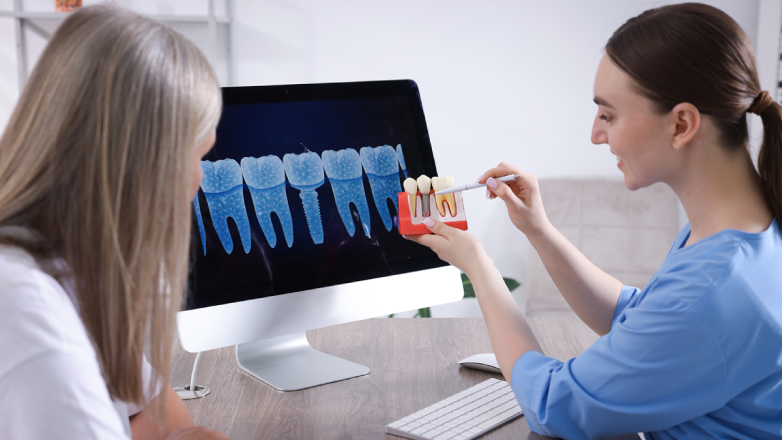
The good news is that the modern grafting techniques that we use at Riccobene are predictable, safe, and highly successful. We use advanced 3D imaging to evaluate bone height and width and determine if grafting is necessary in your case.
Here is the clinical threshold we follow:
- Bone height <10 mm: requires a vertical augmentation
- Bone width <5–6 mm: requires a ridge expansion or grafting
Post-Extraction Bone Loss
After a tooth is removed, the surrounding bone begins to shrink quickly. You can experience up to 50–60% bone loss within 6 months. We sometimes utilize a socket preservation graft, which is placed immediately after the tooth extraction. This helps maintain the bone shape and prevents future complications.
Long-Term Tooth Loss
After a tooth extraction, the jawbone naturally begins to thin since it no longer has a tooth root to support. In the first year alone, it's common to see a bit of horizontal and vertical bone loss, and after 2 years, about 60% of the bone in that area may have resorbed. Over time, this can change your facial profile, giving you a sunken look. It also makes it a little trickier to place an implant if needed.
Periodontal Disease (Stage III/IV)
Severe gum disease can destroy the bone supporting your teeth, causing:
- Bone loss >50% around affected teeth
- Deep periodontal pockets (>6 mm)
- Irregular bone defects
Trauma, Congenital Defects, Tumor Resection
Dental Bone Graft Types
There are several dental bone graft types you can choose from, each with its unique benefits depending on your needs.
Autogenous Bone Grafts (Gold Standard)
- This option uses the patient's own bone: Ramus, chin, iliac crest
- 100% biocompatible, osteoinductive + conductive
- Resorption: 30-50% volume loss
- Block grafts: >5mm defects (ridge split, onlay)
- Particulate: Socket preservation (<3mm)
Autograft Donor Sites Comparison
Allografts (Cadaver Bone)
- This option utilizes freeze-dried human bone: DFDBA, FDBA
- Osteoconductive: 85-90% vital bone formation
- No 2nd surgical site: Cancellous, cortical
- Resorption: 20-30%
- FDA approved: MinerOss, Puros
Xenografts (Animal-Derived)
- Bovine: Bio-Oss (95% survival equivalence)
- Coralline: OsteoBiotics
- Osteoconductive: Minimal resorption (10%)
- Barrier membrane required
Alloplasts (Synthetic)
Bone Graft for Dental Implants Healing Time
The healing time for bone grafting varies depending on the type and size of the graft, but most follow a predictable biological process.
Bone Graft Healing Timeline by Type
Biological Healing Phases
- Weeks 1–2: Initial inflammation and clot formation
- Weeks 3–6: Early bone formation
- Months 2–4: Stronger bone development
- Months 6–12: Full maturation and remodeling
Implant Stability Testing
Factors Affecting Bone Graft Healing Time
Faster healing:
- Younger age
- Advanced techniques like platelet-rich fibrin
- Good oral hygiene
Slower healing:
- Smoking
- Poorly controlled diabetes
- Reduced blood supply
Bone Graft for Dental Implants Success Rates
Bone grafting is highly predictable, with strong clinical outcomes across all techniques.
Overall Clinical Bone Graft Success Rates
- Socket grafts: 95-98% success
- Ridge augmentation: 90-94%
- Sinus lift: 88-92% (lateral window)
- Block grafts: 92-96%
Success by Bone Graft Material
Dental Bone Grafting Procedure?
Here is what you can expect during your bone grafting procedure:
- We will make sure you are nice and comfortable using local anesthesia so you won’t feel a thing.
- Our specialists carefully place the graft material to help encourage your natural bone to grow and get stronger.
- We then add a protective membrane over the area to keep everything safe and snug while it starts to heal.
- We gently close the site with tiny sutures to help your body begin the beautiful process of rebuilding your smile.
Benefits of a Dental Bone Graft
- Makes dental implants possible
- Restores facial structure and volume
- Prevents further bone loss
- Improves long-term implant stability
- Enhances overall oral health
Risks or Complications of Dental Bone Grafts
Even though complications are rare, there are some potential risks to be aware of:
- Infection
- Graft failure (low incidence)
- Delayed healing
- Minor swelling or discomfort
Conclusion: How Riccobene Associates Can Help You Smile with Confidence
Bone grafting plays an important role in successful dental implant treatment. With our advanced materials and professional techniques, we are here to help you rebuild lost jawbone predictably and comfortably.
At Riccobene, you will be treated by board-certified implant specialists with years of experience and a high success rate, ensuring your smile is in the most skilled hands. We use advanced technology and a gentle approach to ensure your procedure is precise and efficient, keeping you comfortable throughout. Additionally, we provide affordable solutions by helping coordinate flexible financing options and accepting a wide range of insurance plans to bring you affordable bone grafting treatment. We strive to make our office a warm, inviting, and patient-friendly place where you can keep smiling confidently. Schedule a consultation today to find out if bone grafting is the right step toward restoring your smile!
Frequently Asked Questions About Dental Implants
When is bone grafting necessary?
A bone graft is only needed when there isn’t enough bone to support a dental implant.
Does bone grafting hurt?
No, we use anesthesia to keep you comfortable and pain-free.
How long after a bone graft can I get implants?
Typically, 3–6 months, depending on how it heals.
Is donor bone safe?
Yes. Donor bone is thoroughly processed and sterilized.
Will my body reject the graft?
Rejection is very rare; grafts are designed to integrate with your natural bone.
Can smokers get bone grafts?
Yes, but the healing process is a lot slower, and the bone graft success rates are slightly lower.
Bone grafting is a common and highly effective procedure used to rebuild jawbone structure. In fact, over 50% of dental implant patients require some form of bone grafting due to bone loss from missing teeth, gum disease, or trauma. If your jawbone isn’t strong or thick enough to support dental implants, a bone graft creates the foundation needed for long-term success.
The good news is that the modern grafting techniques that we use at Riccobene are predictable, safe, and highly successful. We use advanced 3D imaging to evaluate bone height and width and determine if grafting is necessary in your case.
Here is the clinical threshold we follow:
- Bone height <10 mm: requires a vertical augmentation
- Bone width <5–6 mm: requires a ridge expansion or grafting
Post-Extraction Bone Loss
After a tooth is removed, the surrounding bone begins to shrink quickly. You can experience up to 50–60% bone loss within 6 months. We sometimes utilize a socket preservation graft, which is placed immediately after the tooth extraction. This helps maintain the bone shape and prevents future complications.
Long-Term Tooth Loss
After a tooth extraction, the jawbone naturally begins to thin since it no longer has a tooth root to support. In the first year alone, it's common to see a bit of horizontal and vertical bone loss, and after 2 years, about 60% of the bone in that area may have resorbed. Over time, this can change your facial profile, giving you a sunken look. It also makes it a little trickier to place an implant if needed.
Periodontal Disease (Stage III/IV)
Severe gum disease can destroy the bone supporting your teeth, causing:
- Bone loss >50% around affected teeth
- Deep periodontal pockets (>6 mm)
- Irregular bone defects
Trauma, Congenital Defects, Tumor Resection
Dental Bone Graft Types
There are several dental bone graft types you can choose from, each with its unique benefits depending on your needs.
Autogenous Bone Grafts (Gold Standard)
- This option uses the patient's own bone: Ramus, chin, iliac crest
- 100% biocompatible, osteoinductive + conductive
- Resorption: 30-50% volume loss
- Block grafts: >5mm defects (ridge split, onlay)
- Particulate: Socket preservation (<3mm)
Autograft Donor Sites Comparison
Allografts (Cadaver Bone)
- This option utilizes freeze-dried human bone: DFDBA, FDBA
- Osteoconductive: 85-90% vital bone formation
- No 2nd surgical site: Cancellous, cortical
- Resorption: 20-30%
- FDA approved: MinerOss, Puros
Xenografts (Animal-Derived)
- Bovine: Bio-Oss (95% survival equivalence)
- Coralline: OsteoBiotics
- Osteoconductive: Minimal resorption (10%)
- Barrier membrane required
Alloplasts (Synthetic)
Bone Graft for Dental Implants Healing Time
The healing time for bone grafting varies depending on the type and size of the graft, but most follow a predictable biological process.
Bone Graft Healing Timeline by Type
Biological Healing Phases
- Weeks 1–2: Initial inflammation and clot formation
- Weeks 3–6: Early bone formation
- Months 2–4: Stronger bone development
- Months 6–12: Full maturation and remodeling
Implant Stability Testing
Factors Affecting Bone Graft Healing Time
Faster healing:
- Younger age
- Advanced techniques like platelet-rich fibrin
- Good oral hygiene
Slower healing:
- Smoking
- Poorly controlled diabetes
- Reduced blood supply
Bone Graft for Dental Implants Success Rates
Bone grafting is highly predictable, with strong clinical outcomes across all techniques.
Overall Clinical Bone Graft Success Rates
- Socket grafts: 95-98% success
- Ridge augmentation: 90-94%
- Sinus lift: 88-92% (lateral window)
- Block grafts: 92-96%
Success by Bone Graft Material
Dental Bone Grafting Procedure?
Here is what you can expect during your bone grafting procedure:
- We will make sure you are nice and comfortable using local anesthesia so you won’t feel a thing.
- Our specialists carefully place the graft material to help encourage your natural bone to grow and get stronger.
- We then add a protective membrane over the area to keep everything safe and snug while it starts to heal.
- We gently close the site with tiny sutures to help your body begin the beautiful process of rebuilding your smile.
Benefits of a Dental Bone Graft
- Makes dental implants possible
- Restores facial structure and volume
- Prevents further bone loss
- Improves long-term implant stability
- Enhances overall oral health
Risks or Complications of Dental Bone Grafts
Even though complications are rare, there are some potential risks to be aware of:
- Infection
- Graft failure (low incidence)
- Delayed healing
- Minor swelling or discomfort
Conclusion: How Riccobene Associates Can Help You Smile with Confidence
Bone grafting plays an important role in successful dental implant treatment. With our advanced materials and professional techniques, we are here to help you rebuild lost jawbone predictably and comfortably.
At Riccobene, you will be treated by board-certified implant specialists with years of experience and a high success rate, ensuring your smile is in the most skilled hands. We use advanced technology and a gentle approach to ensure your procedure is precise and efficient, keeping you comfortable throughout. Additionally, we provide affordable solutions by helping coordinate flexible financing options and accepting a wide range of insurance plans to bring you affordable bone grafting treatment. We strive to make our office a warm, inviting, and patient-friendly place where you can keep smiling confidently. Schedule a consultation today to find out if bone grafting is the right step toward restoring your smile!
Frequently Asked Questions About Dental Implants
When is bone grafting necessary?
A bone graft is only needed when there isn’t enough bone to support a dental implant.
Does bone grafting hurt?
No, we use anesthesia to keep you comfortable and pain-free.
How long after a bone graft can I get implants?
Typically, 3–6 months, depending on how it heals.
Is donor bone safe?
Yes. Donor bone is thoroughly processed and sterilized.
Will my body reject the graft?
Rejection is very rare; grafts are designed to integrate with your natural bone.
Can smokers get bone grafts?
Yes, but the healing process is a lot slower, and the bone graft success rates are slightly lower.
Related Articles
find a location